

5 study paths from firefighters, flora, dragons, and ukiyo-e
Japanese tattooing is one of the richest visual traditions in tattoo culture. That is exactly why it is so easy to approach badly.
A lot of artists collect reference. Far fewer know how to study it well.
The goal is not to borrow finished answers. It is to understand why certain images still work so powerfully — why they move, why they breathe, why they feel alive on the body, and why they continue to speak across generations.
Used properly, reference does not make your work less personal. It does the opposite. It sharpens the eye, deepens your choices, and gives you more to say.
Japanese visual material is especially valuable because it offers more than motifs. It offers rhythm, seasonality, hierarchy, symbolism, body logic, and a way of thinking that rewards slow study.
Approached well, it can teach far more than how to draw a dragon or place a peony.
It can teach you how images work.
What good reference study teaches
- movement
- body logic
- seasonality
- composition
- variation
- symbolism
Reference is not there to be repeated
When artists talk about “using reference,” they often mean collecting images. But collecting is only the beginning.
Study starts when you stop asking, What can I take from this? and start asking, What is this teaching me?
That shift matters.
Copying gives you surface. You get the outer shape, but not the inner logic. You might repeat a pose, a flower, a face, or a wave pattern, but the result often feels flatter than the source because you are repeating the appearance without understanding the structure underneath it.
Study is slower, but it gives you something more useful. It teaches you to see relationships: how one form balances another, how a composition leads the eye, how supporting elements change the mood, how repetition creates force, and how restraint creates elegance.
That is where reference becomes useful.
Japanese visual culture is especially rewarding in this way because its strength rarely comes from one thing alone. It is not only about beauty. Not only about symbolism. Not only about drama. Its power often comes from how many things are being handled at once — with control.
If you want stronger work, study that control.
 Utagawa Yoshitora, Fireman, ca. 1858. The Metropolitan Museum of Art, New York, Gift of the Estate of Samuel Isham, 1914 (JP212.25). Public Domain
1. Firefighters of Edo: study movement, attitude, and body logic
One of the best places to begin is not with a finished tattoo at all, but with the tattooed firefighters of Edo.
Their imagery carries more than toughness or spectacle. It shows how images were understood on the body — how scale, flow, posture, and placement work together. This is important, because Japanese tattooing has always been more than isolated symbols. It is a body language.
When you study older material like this, do not only look at what is depicted. Look at how forms are distributed. Look at what is left open. Look at how one area leads into another. Look at how strength is created not just through density, but through movement and control.
For artists working on larger compositions, this matters far more than simply collecting motifs. It teaches you to think beyond the single image and toward the larger piece: sleeve, panel, back, body.
If you want a deeper look at the social world and body culture behind this material, read our article on the tattooed firefighters of Edo.

This is also one reason The Japanese Tattoo by Manami Okazaki is such a valuable reference title. It places the visual language in a broader cultural context and reminds us that tattooing belongs to a much longer conversation, not just a style to imitate from the outside.
2. Flora: study seasonality, restraint, and supporting elements
A lot of artists underestimate how much floral material can teach them.
Flowers, branches, leaves, and seasonal elements are not just decorative support in Japanese work. They often carry timing, atmosphere, softness, tension, and emotional tone. They help determine whether a composition feels heavy or light, still or active, elegant or forceful.
That is why floral study matters.
When you look closely, you begin to notice that the most useful lessons are not always in the main motif. Sometimes they are in how a branch turns. Sometimes in how blossoms are spaced. Sometimes in how a cluster softens a harder image nearby. Sometimes in how negative space is preserved.
This is where restraint becomes visible.
Instead of copying a flower exactly, study what it is doing compositionally. Is it calming the design down? Is it leading the eye upward? Is it creating a seasonal frame? Is it adding delicacy to something otherwise bold?

A title like Japanese Flora: Asia Edition by Sören Sangkuhl is useful for precisely this reason. It is not only a collection of beautiful imagery. It is a study in rhythm, mood, spacing, and natural form. Used well, it helps artists build sensitivity — not just ornament.
And sensitivity is part of strength.
3. Ukiyo-e: study composition and visual hierarchy
If you want stronger compositions, study ukiyo-e.
Not casually. Properly.
Woodblock prints teach lessons that carry directly into tattooing: cropping, silhouette, contrast, pacing, layering, and visual hierarchy. They also show something many artists struggle with — how to make an image feel full without making it crowded.
That balance is hard to fake. It comes from looking closely.
Ask simple questions. Where does the eye go first? What shape holds the image together? What has been simplified, and what has been allowed to carry detail? How is space being used? What is suggested rather than described?
These are not abstract questions. They are practical. Stronger answers usually lead to stronger design decisions.

This is one reason Something Wicked from Japan: Ghosts, Demons, and Yokai in Ukiyo-e Masterpieces is such rich reference material. Beyond the obvious appeal of the subject matter, it offers a chance to study drama, asymmetry, storytelling, gesture, and visual tension in a form that still feels incredibly alive.
There is force in these images, but there is also clarity. That combination is worth studying — especially if you want your work to carry energy without collapsing into noise.
4. Dragons: study variation without losing identity
Dragons are one of the best subjects for long-term study because they show how deep a single motif can go.
A weaker approach to reference asks, How do I draw this dragon? A better one asks, What makes one dragon feel convincing, balanced, aggressive, calm, ancient, or alive?
That is where study becomes useful.
Look at body direction. Head shape. Jaw tension. Scale rhythm. Whisker movement. Negative space. Weight distribution. Where the power sits. Where the line of motion begins and where it resolves.
When artists keep returning to dragons, it is not because the motif is repetitive. It is because it can absorb endless variation without losing its identity. That makes it perfect material for developing visual vocabulary.

This is exactly why Daily Dragon Sketches – Summer by Bill Canales has real studio value. It shows what repetition looks like when it is used properly: not repetition for its own sake, but repetition as a way of refining judgment, pushing variation, and building fluency over time.
That kind of practice matters. It teaches artists to stay inside a motif long enough to move beyond the first obvious answer.
And that is often where better work begins.
5. Symbolism: study what the image is carrying beneath the surface
The strongest designs rarely rely on appearance alone.
Japanese imagery carries layers — endurance, protection, season, change, danger, impermanence, resilience, luck, discipline, transformation. You do not need to become academic about it, but you do need to take it seriously.
Because meaning affects choices.
It affects which motifs belong together. It affects tone. It affects the feeling of a piece. It affects whether something lands as thoughtful or shallow. Cultural literacy does not make work stiff. It gives it weight.
That is another reason a serious reference library matters. Good books do more than show you what something looked like. They help you understand what it was carrying.
That kind of understanding is difficult to replace once you have it.
A simple way to study reference without copying
If you want a practical method, keep it simple:
-
Choose one theme
Not everything at once. Fire, dragons, peonies, yokai, waves — whatever you want to understand better. -
Gather 5–10 strong examples
A small set is enough. You are looking for clarity, not volume. -
Identify repeated principles
What keeps returning? Movement, silhouette, spacing, gesture, layering, mood, contrast? -
Sketch from memory
Put the reference away and test what you actually understood. -
Compare and refine
Return to the source. Where did you lose structure? What improved? What still feels unclear?
That process is much more valuable than staying too close to the source image the whole time.
Reference is best used as a teacher, not a crutch.
Build a reference library that sharpens your eye
The best reference library is not the biggest one. It is the one that helps you see more clearly.
A strong library gives you cultural context, motif depth, compositional intelligence, and material you can return to over time without exhausting it. It should not only show you impressive work. It should train your judgment.
That is why we keep returning to books that reward slow study.
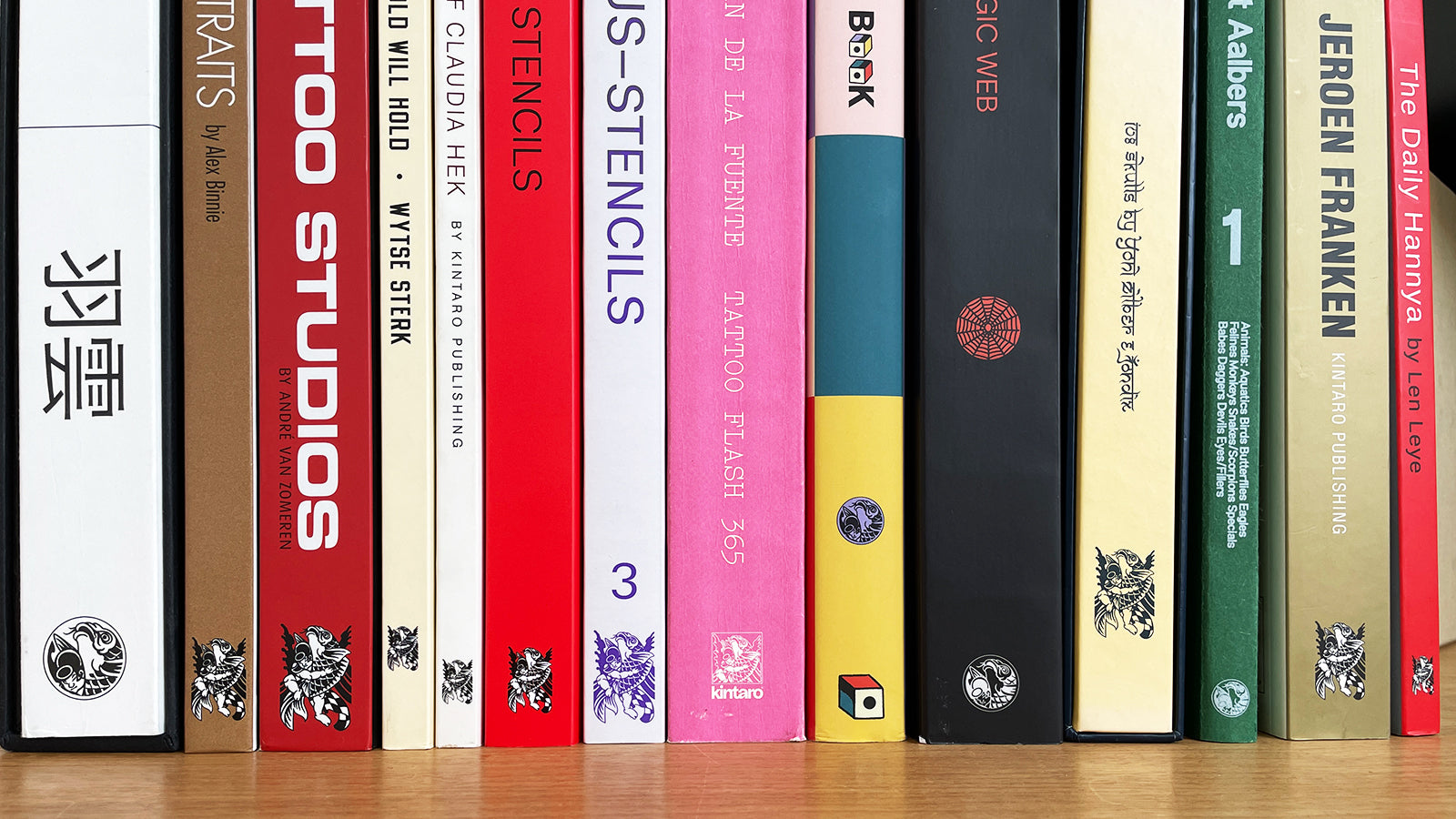
If you are building a Japanese reference shelf with that in mind, these are worth spending real time with:
- The Japanese Tattoo by Manami Okazaki
- Japanese Flora: Asia Edition
- Daily Dragon Sketches – Summer
- Something Wicked from Japan
They are different books, but that is the point. A useful shelf should widen your eye, not narrow it.
Final thought
The goal of reference is not imitation.
It is deeper seeing.
The more seriously you study movement, symbolism, hierarchy, seasonal feeling, and visual language, the less you need to borrow finished answers from someone else. You begin making stronger choices because you understand more — not because you have memorized more.
That is the real value of reference.
And that is where stronger work begins.

Leave a comment
This site is protected by hCaptcha and the hCaptcha Privacy Policy and Terms of Service apply.