
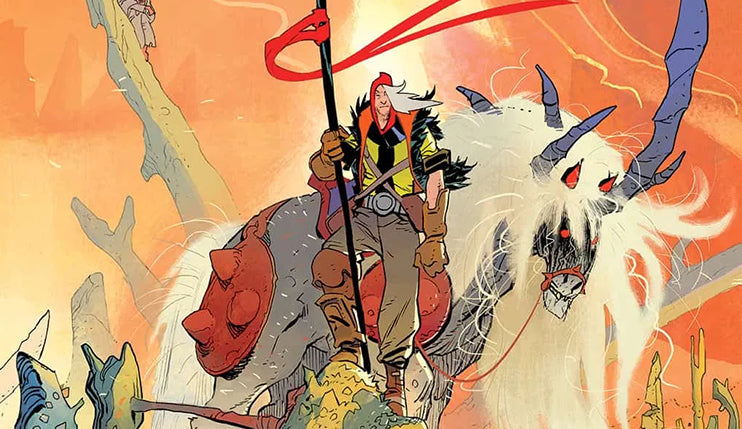
The Unique Fusion of Magical Realism and Political Commentary.
Latin American comics stand apart for their vibrant blend of magical realism and pointed political commentary. Unlike the superhero-centric narratives of American comics or the refined storytelling of European bande dessinée, Latin American graphic narratives often weave the fantastic seamlessly into the everyday, reflecting the region’s complex histories and cultures.

-
Magical realism in Latin American comics is not just a stylistic choice—it’s a tool for social and political critique. By integrating supernatural elements into real-world settings, creators highlight the absurdities, injustices, and resilience found in their societies. This approach allows them to address themes such as authoritarianism, social inequality, and cultural identity while circumventing censorship and engaging readers on a deeper level.
-
The region’s rich oral traditions, indigenous myths, and folklore provide fertile ground for these stories, making the magical feel natural and the real appear extraordinary.

El Eternauta - Art by Francisco Solano López
Classic Example: El Eternauta
One of the most iconic examples of this blend is El Eternauta, a seminal Argentine comic created by Héctor Germán Oesterheld and Francisco Solano López. First published in the late 1950s, El Eternauta tells the story of Juan Salvo, an ordinary man who, along with his friends, fights for survival during a deadly snowfall and subsequent alien invasion in Buenos Aires.
Héctor Germán Oesterheld, the writer, was an outspoken critic of the military dictatorship and ultimately became one of its victims, disappeared by the regime. Meanwhile, Francisco Solano López, the artist, endured censorship and was compelled to continue his work in exile.
Cultural and Political Significance
-
El Eternauta is celebrated for its themes of resistance, solidarity, and survival under authoritarian regimes. Its narrative is widely interpreted as a political allegory, reflecting Argentina’s turbulent history and the author’s personal fate during the country’s military dictatorship.
-
The comic’s focus on a “collective hero”—a group of ordinary people banding together—challenges the individualistic hero archetype common in Western comics, instead highlighting community, resilience, and shared struggle as core values of Argentine and broader Latin American identity.
-
The enduring relevance of El Eternauta is evident in its recent adaptations and continued popularity, which have reignited interest in the original work and inspired new generations of readers and creators.

Héctor Germán Oesterheld
Reflecting and Influencing Local Culture
Latin American comics are deeply intertwined with the societies from which they emerge:
-
Political Resistance: During periods of dictatorship and censorship, comics became a means of subtle resistance. Magical realism allowed creators to critique oppressive regimes and societal issues without overt confrontation, making the genre a form of cultural and political subversion.
-
Cultural Identity: Comics like El Eternauta, Mafalda (by Quino), and works by creators such as Ríus in Mexico, reflect everyday realities, humor, and the collective memory of their nations. They address the clash between rural and urban life, the persistence of folklore, and the negotiation of modernity and tradition.
-
Influence on Society: These works have shaped national identity, contributed to public debates, and fostered a sense of unity and resilience. The popularity of such narratives demonstrates how comics can serve as both mirrors and molders of cultural consciousness.

Art by Gustavo Cabral, aka Ciruelo
Final Thoughts
Latin American comics offer a rich tapestry where the magical and the real coexist, serving as both a reflection of and a commentary on the region’s unique social, political, and cultural landscapes. Through classics like El Eternauta and many others, these comics continue to inspire, challenge, and unite readers, both locally and globally.



Leave a comment
This site is protected by hCaptcha and the hCaptcha Privacy Policy and Terms of Service apply.